LR-Cal LTC-FB-0200-60
Temperature calibration micro bath ...+200°C
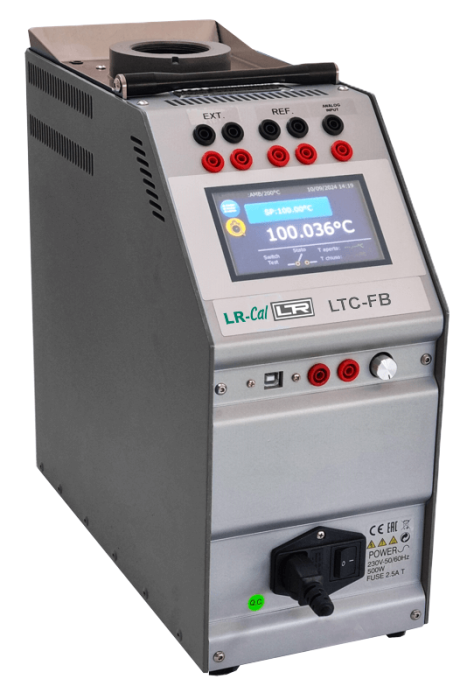

- Portable
- Temperature range ambient temperature...+200°C
- Accuracy ±0.2°C, stability ±0.03°C
- Bath volume approx. 500 cm³
(60 mm diameter, 170 mm depth) - Option: changeable calibration bath insert
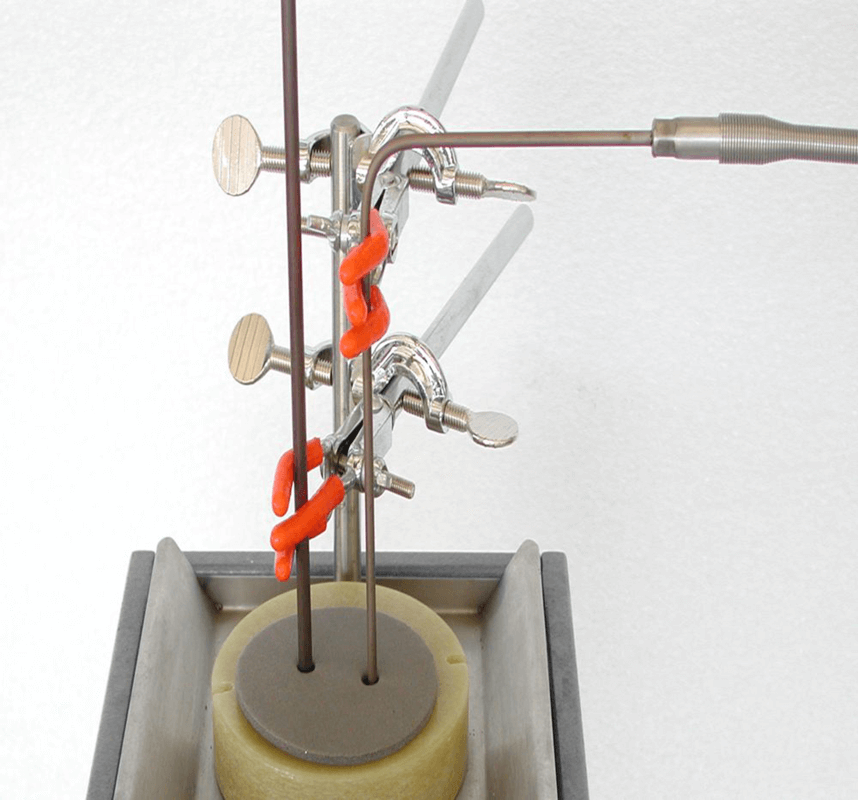
incl. support for test item and reference
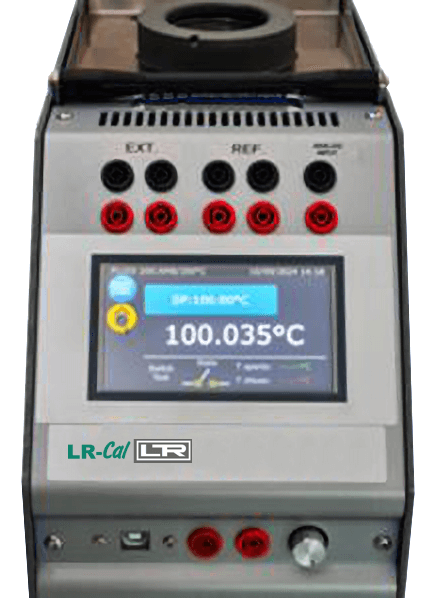
Simple operation via touchscreen
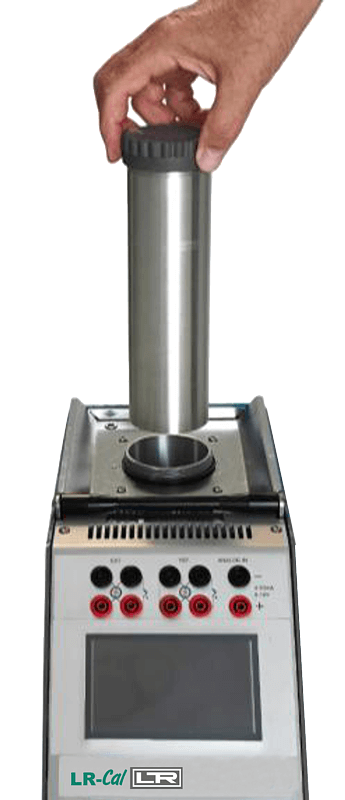
LTC-FB-INSERT
Changeable calibration bath insert
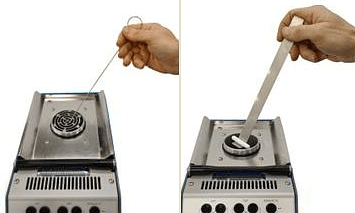
LTC-FB-ENT-TOOL
Optional tool set for removing protective grilles + magnetic mixer rod (easier emptying+cleaning)
Description
LR-Cal LTC-FB-0200-60 Description
The LR-Cal LTC-FB-0200-60 portable temperature calibration bath serves as a temperature source and reference instrument in one, for testing and calibrating all types of temperature measuring instruments. Various metal block inserts are also available.
- Optimal for calibration of glass thermometers and laboratory thermometers as well as temperature sensors with not exactly cylindrical shape
- Homogeneous temperature distribution due to adjustable magnetic mixer
- Simple operation with color touchscreen
- Ramp function + thermostat tests
- Computer-controlled calibrations via USB interface and optional software LR-Cal Aq2Sp2 for MS-Windows® computers
- Option: changeable calibration bath insert for changing the calibration fluid without emptying and cleaning of the reservoir
- Option: dry block inserts to convert the device to a dry block temperature calibrator
Options <strong>LTC-MP-3I</strong> (3 measuring inputs) + <strong>LTC-MP-115V</strong> (for 115 VAC)
Option LTC-MP-3I - three configurable measuring inputs
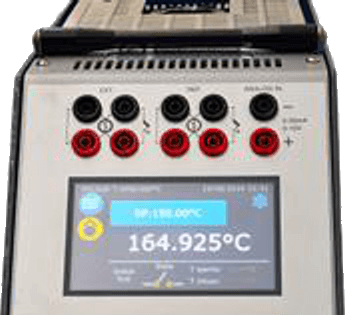 The LTC-MP-3I option can be ordered together with the LR-Cal LTC-FB-0200-60:
Device version with 3 configurable measuring inputs. Of these, 2 for resistance thermometers (Pt 100 (2-, 3- or 4-wire) or Pt 100, or thermocouples incl. cold junction compensation, types B, E, J, K, N, R, S and T, and 1 measuring input for analog output signals 4...20 mA or 0...10 V.
Order-Code: LTC-MP-3I (must be ordered together with the base unit)
Extended scope of delivery:
Electrical connection cables, plugs/terminals (red/black) for electrical connections
| Accuracy (max. deviation) of resistance and thermocouple measurement inputs with option LTC-MP-3I: | ||||||||
|---|---|---|---|---|---|---|---|---|
| Pt 100 or Pt 1000 | at -40°C: | ±0.09°C | at 0°C: | ±0.08°C | at +150°C: | ±0.11°C | at +300°C: | ±0.14°C |
| Thermocouple type B | at +950°C: | ±0.97°C | at +1050°C: | ±1.03°C | at +1200°C: | ±1.12°C | ||
| Thermocouple type E | at -40°C: | ±0.42°C | at 0°C: | ±0.40°C | at +350°C: | ±0.61°C | ||
| Thermocouple type J | at +200°C: | ±0.52°C | at +450°C: | ±0.67°C | at +700°C: | ±0.82°C | ||
| Thermocouple types K, N, R and S | at +400°C: | ±0.64°C | at +700°C: | ±0.82°C | at +1000°C: | ±1.00°C | ||
| Thermocouple type T | at -40°C: | ±0.42°C | at 0°C: | ±0.40°C | at +350°C: | ±0.61°C | ||
Option LTC-MP-115V - device version for für 115 VAC
The LTC-MP-115V option can be ordered together with the LR-Cal LTC-FB-0200-60:
Device version for power supply 115 VAC 50/60 Hz (instead of für 230 VAC).
Specification
LR-Cal LTC-FB-0200-60 specification
| Description: | Specification: | |
|---|---|---|
| Temperature range: | ambient temperature...+200°C | |
| Display + operation: | color touchscreen | |
| Display accuracy: | ±0.2°C * | |
| Measuring units: | °C / °F / K | |
| Displey resolution: | 0.1° / 0.01° / 0.00^° | |
| Mean heating time: (incl. stabilization) |
approx. 30 min. from ambient temperature to +200°C |
|
| Mean cooling time: (incl. stabilization) |
approx. 75 min. from +200°C to ambient temperature |
|
| Stability: | ±0.03°C at full temperature range ** | |
| Axial uniformity: | ±0.01°C at +140°C | |
| Radial uniformity: | ±0.06°C at +140°C *** | |
| Hole diameter: | 60 mm | |
| Hole depth: | 170 mm | |
| Insert material: | anticorodal | |
| Switch test; voltage: | Open/Closed; 4.5 VDC | |
| Adjustable ramp function: | from 0.1°C/min | |
| Computer interface: | USB type B | |
| Automatic calibration: | at 5 temperature points | |
| External sensors/probes: | Optional with Order-Code LTC-MP-3I (to be ordered together with instrument) | |
| Operation voltage: | 230 VAC (optional 115 VAC) 50/60 Hz | |
| Electric powert: | 500 VA | |
| Dimensions: | 160 x 360 x 350 mm | |
| Weight incl. standard accessories: | 8.3 kg | |
All values have been measured at ambient temperature of +20°C and with a sensor with diamter 6 mm.
The achievement of stabilization is confirmec by a displayed root symbol and an audial beep.
* = Temperature deviation between display and reference probe.
** = Max. temperature difference at stable temperature over 30 min.
*** = Measured from the button up to 40 mm.
Scope of standard delivery
LR-Cal LTC-FB-0200-60 scope of delivery
- Portable temperature calibration micro bath LR-Cal LTC-FB-0200-60
- Spare fuses
- Power supply cable
- Connection cables for thermostat tests
- Bottle with 500 cm³ silicone oil 47V20
- Holding support for test items, e.g. glass thermometers
- Sealing cap for the reservoir (for transport purposes)
- Carrying bag with shoulder trap
- Only if option LTC-MP-3I is ordered with the device: electrical connection cables and plugs (red/black) for the three measuring inputs
- Acceptance test certficate 3.1 in accordance with DIN EN 10204 (factory calibration certificate)
- Operating manual DE+EN
LR-Cal LTC-FB-0200-60 options + accessories
3 configurablemeasuring inputs
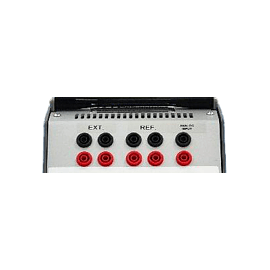
Option, must be ordered together with the calibrator:
Device version with 3 configurable measuring inputs
2 x for Pt 100 / Pt 1000 / Thermocouples
1 x for analog signal 4-20mA / 0-10V
Power supply
115 VAC
Option, must be ordered together with the calibrator:
Device version for power supply
115 VAC 50/60 Hz
(instead of 230 VAC)
NO extra charge
Exchangeablecalibration bath insert
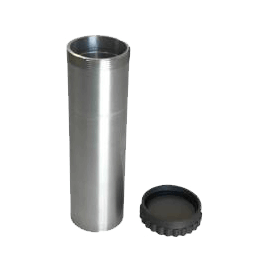
Option:
Calibration bath insert incl. closing cap
For fast change of the silicone oil resp. the calibration fluid (without empying and cleaning the reservoir)
Extension of the
immersion depth
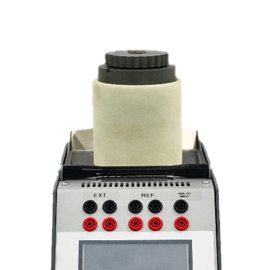
Accessory:
Extension tube to increase the immersion depth
Total length 255 mm
Usable immersion depth 230 mm
Cooling coil
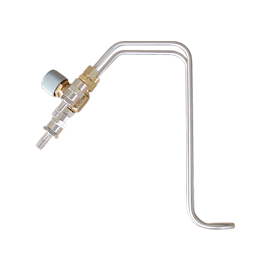
Accessory:
Stainless steel cooling coil. The cooling coil shortens the cooling time, and it can also shift the start of the working range of the calibrator downwards (but above 0°C).
Requires fresh water connection
Windows-PCsoftware Aq2Sp2
Accessory:
Windows-PC software Aq2Sp2
(delivered as download link)
Conversion kit to
dry block calibrator
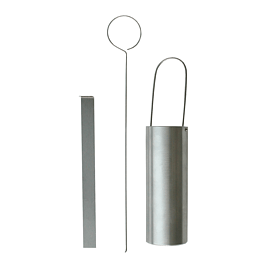
Accessory:
Dry block conversion kit (aluminum)
Diameter 60 mm
Depth 170 mm
Without holes (for self-drilling)
Conversion kit to
dry block calibrator
Accessory:
Dry block conversion kit (aluminum)
Diameter 60 mm
Depth 170 mm
With 9 drillings/holes: 4.0+4.0+4.5
+5.5+6.5+6.5+8.5+10.5+12.5 mm
Sturdy caseAluminum
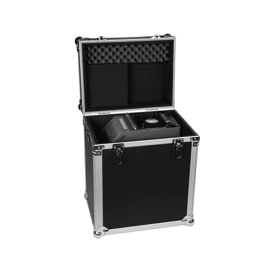
Accessory:
Sturdy case made of aluminum with molded foam inserts
Dimension 450 x 280 x 380 mm
Weight 4.8 kg
Shipping dimensions:
600 x 370 x 500 mm
Carrying bag
with shoulder trap
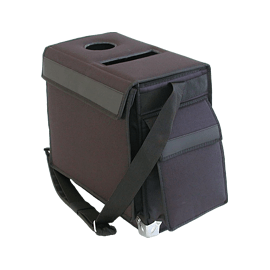
Spare part:
Carrying bag with shoulder trap
Dimension 410 x 220 x 380 mm
Weight 1.45 kg
Shipping dimensions:
600 x 370 x 500 mm
(1 bag ist included in calibrators delivery)
Removal tools for
protect. grill + mixer rod
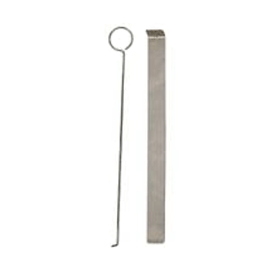
Accessory:
Removal tools for protective grilles and magnetic mixer rod
Facilitates emptying and cleaning
(Already included in the scope of delivery of LTC-FB-INSERT and LTC-FB-DB-... inserts)
DAkkS-certification

Option:
DAkkS certificate of calibration
For the measuring chain consisting of display of the calibrator and reference sensor, 6 measuring points
Silikone oil
47V20
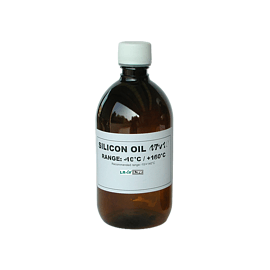
Spare part:
500 cm³ calibration fluid
Silikone oil 47V20
for temperature -20...+200°C
(1 bottle included in calibrators scope of delivery)
Silikone oil
47V50
Accessory:
500 cm³ calibration fluid
Silikone oil 47V50
for temperature +30...+200°C
Silikone oil
47V100
Accessory:
500 cm³ calibration fluid
Silikone oil 47V100
for temperature +50...+200°C
Suitable reference sensors (probes) for calibrator version with option LTC-MP-3I (3 configurable measuring inputs):
- External Pt 100 reference probes see LR-Cal LRT-F (Pt 100)...
- External reference thermocouple see LR-Cal LRT-F (TC)...